What it is, in 20 seconds
One vial, many clean draws
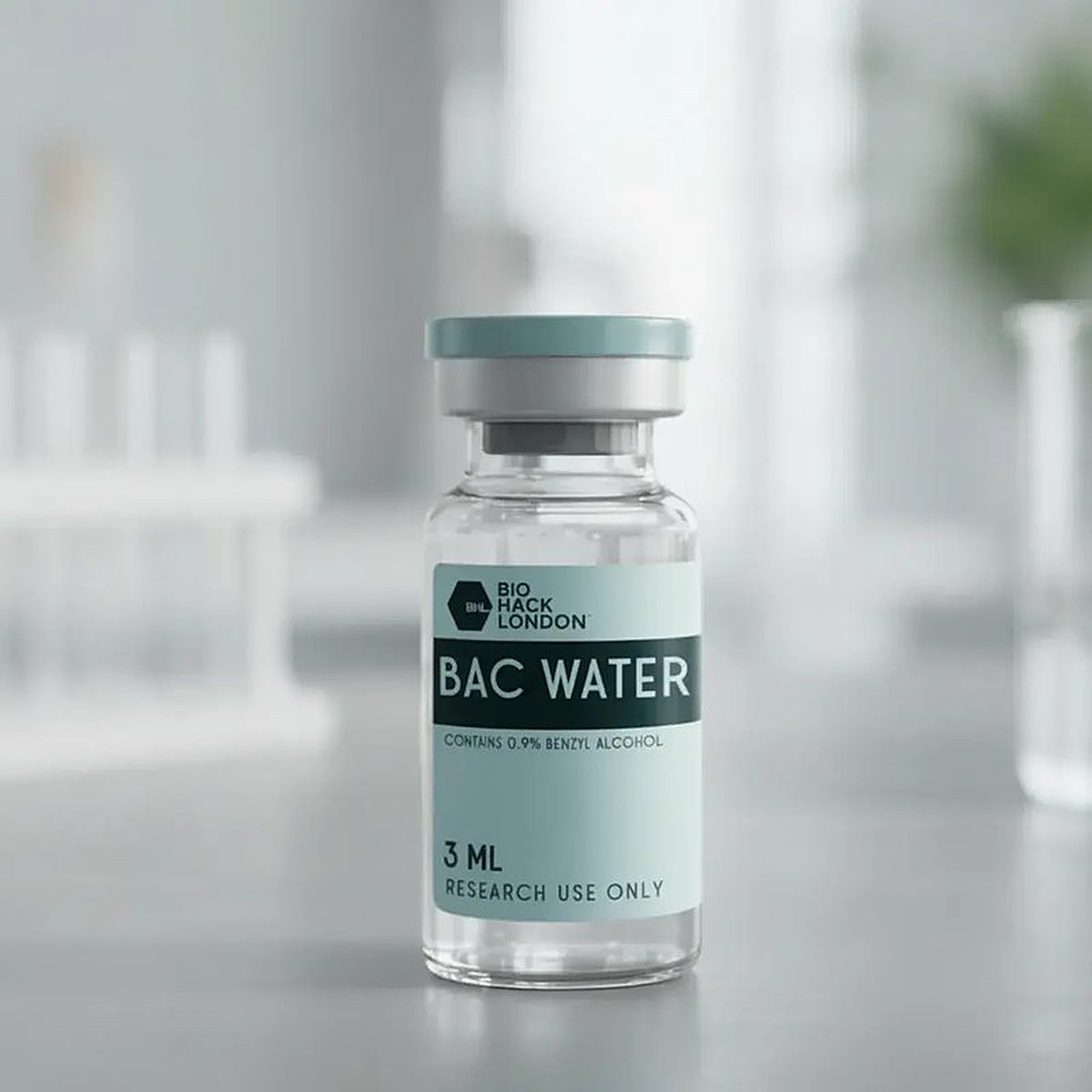
Bacteriostatic water is sterile water with a small amount of preservative, usually benzyl alcohol at around 0.9%. The preservative inhibits bacterial growth, so a sealed vial can be entered more than once instead of being thrown away after a single preparation. It is the standard liquid for bringing lyophilised (freeze-dried) material back into solution.
Open the calculatorBacteriostatic vs sterile water
| Bacteriostatic water | Sterile water | |
|---|---|---|
| Contains a preservative | ✅ Yes, benzyl alcohol at roughly 0.9% | No |
| Suitable for repeated draws | ✅ Yes, the preservative inhibits bacterial growth between draws | No, treated as single use |
| Shelf life once opened | ✅ Commonly stated as up to 28 days | Discarded after one use |
| Typical use | Reconstituting lyophilised material that will be drawn from more than once | A single preparation, then discarded |
| Storage after opening | Refrigerated, sealed, away from light | Not applicable |
Concentration calculator
Work out how much bacteriostatic water to add for the concentration you want, and how much solution holds a given amount. The formula: volume (ml) = mass (mg) ÷ target concentration (mg/ml).
5 mg to 5 mg/ml
5 ÷ 5 = 1 ml of BAC water. Each 0.1 ml holds 0.5 mg.
10 mg to 2 mg/ml
10 ÷ 2 = 5 ml of BAC water. Each 0.5 ml holds 1 mg.
Bigger volume, fewer errors
A more dilute solution is more forgiving to measure accurately. Very small volumes of a concentrated solution are harder to get right.
Reconstitution, step by step
The standard laboratory method for bringing a lyophilised powder back into solution with bacteriostatic water.
What you'll need
- The sealed vial of lyophilised material
- Bacteriostatic water
- A sterile pipette for measuring
- Alcohol wipes
- A clean, organised workspace
- Labels and a log
Before you start
Read the supplier's documentation for the material. It may specify a recommended liquid, the expected time to dissolve and how long the solution keeps. Work out your volume with the calculator and write it down first.
- Bring both vials to room temperature. Material taken straight from cold storage should be left sealed for 10–15 minutes so condensation doesn't form on the cold glass.
- Calculate and record your volume. Volume sets the concentration, so decide it and log it, with the batch number and date, before you draw anything.
- Clean both stoppers. Wipe the rubber stopper on the material vial and on the water vial with an alcohol wipe and let each air-dry. The stopper is the only barrier between the contents and the room.
- Measure the calculated volume of BAC water. Draw exactly the volume you calculated. Tap out any air bubbles so the measurement stays accurate.
- Add it slowly down the inside wall. Direct the liquid against the glass, never straight onto the powder. This reduces foaming and protects the material.
- Swirl gently, never shake. Rotate the vial until the powder dissolves, usually within a minute. If it's slow, give it more time rather than more force, and check the supplier's documentation.
- Check it. Hold the vial to the light. The solution should be clear, with no particles or undissolved material.
- Label and refrigerate. Record the material, the volume added, the resulting concentration and the date, and store at 2–8°C. An unlabelled vial is unusable a week later.
Common mistakes and quick fixes
| Mistake | Why it matters | Fix |
|---|---|---|
| Shaking instead of swirling | Foaming damages delicate material | Gentle swirl only |
| Liquid straight onto the powder | Localised damage and frothing | Run it down the vial wall |
| Opening a cold vial | Condensation adds moisture | 10–15 min at room temperature first |
| Using non-sterile water | Contamination | Bacteriostatic or sterile water only |
| Too many punctures in one stopper | The seal weakens | Plan your draws |
| No label | You lose track of batch and date | Label straight away |
| Keeping a solution too long | Content degrades over time | Split into smaller portions and freeze them; don't refreeze |
How to choose a BAC water supplier
Six quick checks before you order.
Preservative stated
The label should say 0.9% benzyl alcohol. If the preservative isn't listed, you can't be sure it's bacteriostatic at all.
Factory-sealed vial
An intact cap and rubber stopper, with no signs of tampering, leaks or cloudiness.
Batch and expiry printed
A lot number and expiry date on every vial, so you can trace it and know when it's out of date.
The right size
Pick a size you'll use up within 28 days of opening: 3 ml for smaller batches, 10 ml if you prepare larger volumes or several vials at once.
UK dispatch
Shorter transit times and no customs delays. Check the dispatch time before you order.
Clear returns
Look for a returns policy that covers unopened, sealed vials and faulty items.
Tips and tricks
- Order a spare. Once a vial is opened, the 28-day clock starts. A second sealed vial means you're never caught short.
- Write the opening date on the cap. It's the quickest way to know when to replace it.
- Standardise your concentration. Using the same target, such as 2 mg/ml, keeps your calculations simple.
- Always wipe the stopper before every draw, not just the first one.
- Keep opened vials in the fridge door, not at the back where they can freeze.
Common questions
What is bacteriostatic water?
Bacteriostatic water is sterile water containing a small amount of preservative, usually benzyl alcohol at around 0.9%. The preservative inhibits bacterial growth, which allows a sealed vial to be entered more than once instead of being discarded after a single preparation.
What is the difference between bacteriostatic water and sterile water?
Sterile water contains no preservative and is treated as single use: once the seal is broken there is nothing preventing bacterial growth. Bacteriostatic water contains a preservative, so it can be drawn from repeatedly over a period commonly stated as up to 28 days when kept refrigerated and sealed.
How long does bacteriostatic water last once opened?
Up to 28 days is commonly stated once the seal has been broken, provided the vial is kept refrigerated, sealed and out of direct light. The unopened vial has its own expiry date printed on the label, which is separate and longer.
How should bacteriostatic water be stored?
Store unopened vials at room temperature away from direct light. Once opened, keep the vial refrigerated (2–8°C) and sealed, and wipe the stopper with an alcohol wipe before each entry.
Which vial size should I choose?
3 ml and 10 ml are the common sizes. 3 ml suits smaller batches and is used up well within the 28 days the preservative is effective for. 10 ml suits larger volumes or preparing several vials at once. Choose the size you will finish within 28 days of opening.
Why swirl and not shake?
Shaking creates foam and agitation that can damage delicate material in solution. Gentle swirling dissolves most powders fully; if it is slow to dissolve, more time works better than more force.
Is bacteriostatic water a medicine?
No. The bacteriostatic water sold here is supplied for laboratory use only. It is not a medicine and is not for human or veterinary use. This page describes laboratory handling only.
Supplied for laboratory use only. Not a medicine. Not for human or veterinary use. This page describes laboratory handling only and is not medical advice.